They're scattered.
Policies and procedures exist, but staff don't have a dependable manual for their job.
Bring the policies, procedures, checklists, and notes you already have. We turn them into rolebooks: coherent operating manuals for every role, then keep each one current as your business grows.
Need to capture work that isn't written down? Tell us about it.
When instructions are scattered or stale, new hires have to ask whoever is free. Usually that's you or the one veteran who knows how it's done, pulled away from the work only you can do to answer the same questions again.
Policies and procedures exist, but staff don't have a dependable manual for their job.
The office, field, and management teams end up working from different instructions.
Procedures change in real life. The written versions don't always catch up.
Sample procedures are sold by the binder, and every contractor in your area can buy the same set. Fill in the blanks and you get one reason left for a customer to choose you: price.
Building codes and industry standards already set the baseline everyone has to meet. Your rolebooks should cover what sets you apart.
A rolebook your competitors can't buy.
Four outcomes that stick, built around your roles and maintained as your business evolves.
Turnover happens in every business; what matters is how quickly a replacement gets up to speed. Instead of asking a veteran to rebuild training from memory, hand the new hire a current rolebook with only what their role needs.
Changes to policies, procedures, and workflows aren't forgotten in meetings, text messages, or email threads. Once you approve a change, every affected rolebook—office, field, and management—is reissued together within five business days.
Every edition is versioned, and a plain-language change record says what changed, when, and which rolebooks it affected. Managers have a clear standard for coaching, discipline, and disputes—and a date to point to when someone says "nobody told me."
A broad job like "technician" can become a progression of clearly defined roles: Helper Technician, Junior Technician, Technician, Senior Technician, and Lead Technician—then Supervisor or Manager. Each rolebook makes the next level's responsibilities explicit, so 3–6 month reviews can point to concrete skills, expectations, pay bumps, and perks instead of a vague promise to advance.
One design, every rolebook. Your logo, colours, fonts, and motto, carried across the whole set.
A format that suits your company. Full-page A4 or letter for binders, or a pocket booklet for the truck.
Each cover shows the edition and issue date, so anyone can tell which copy is current.
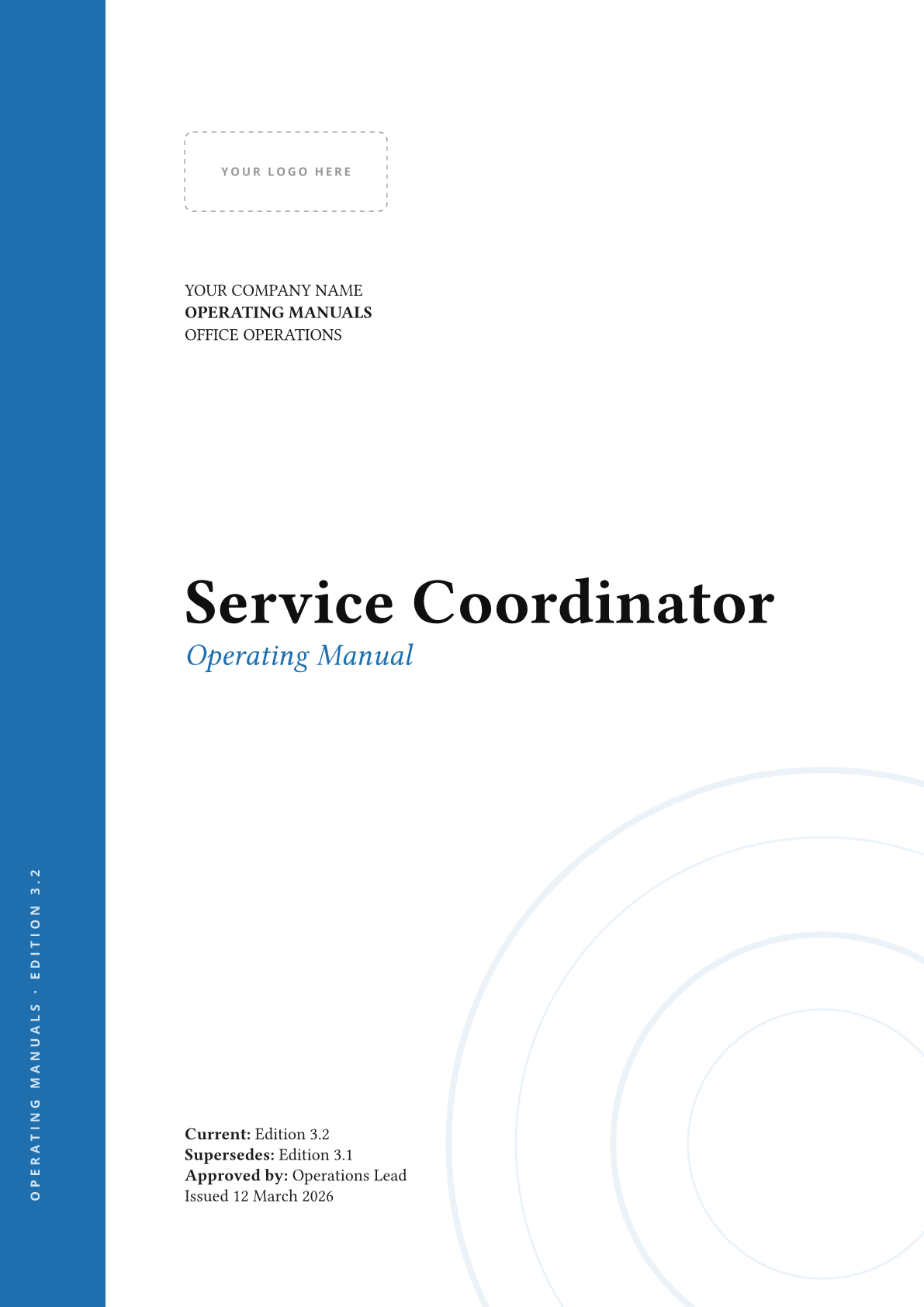
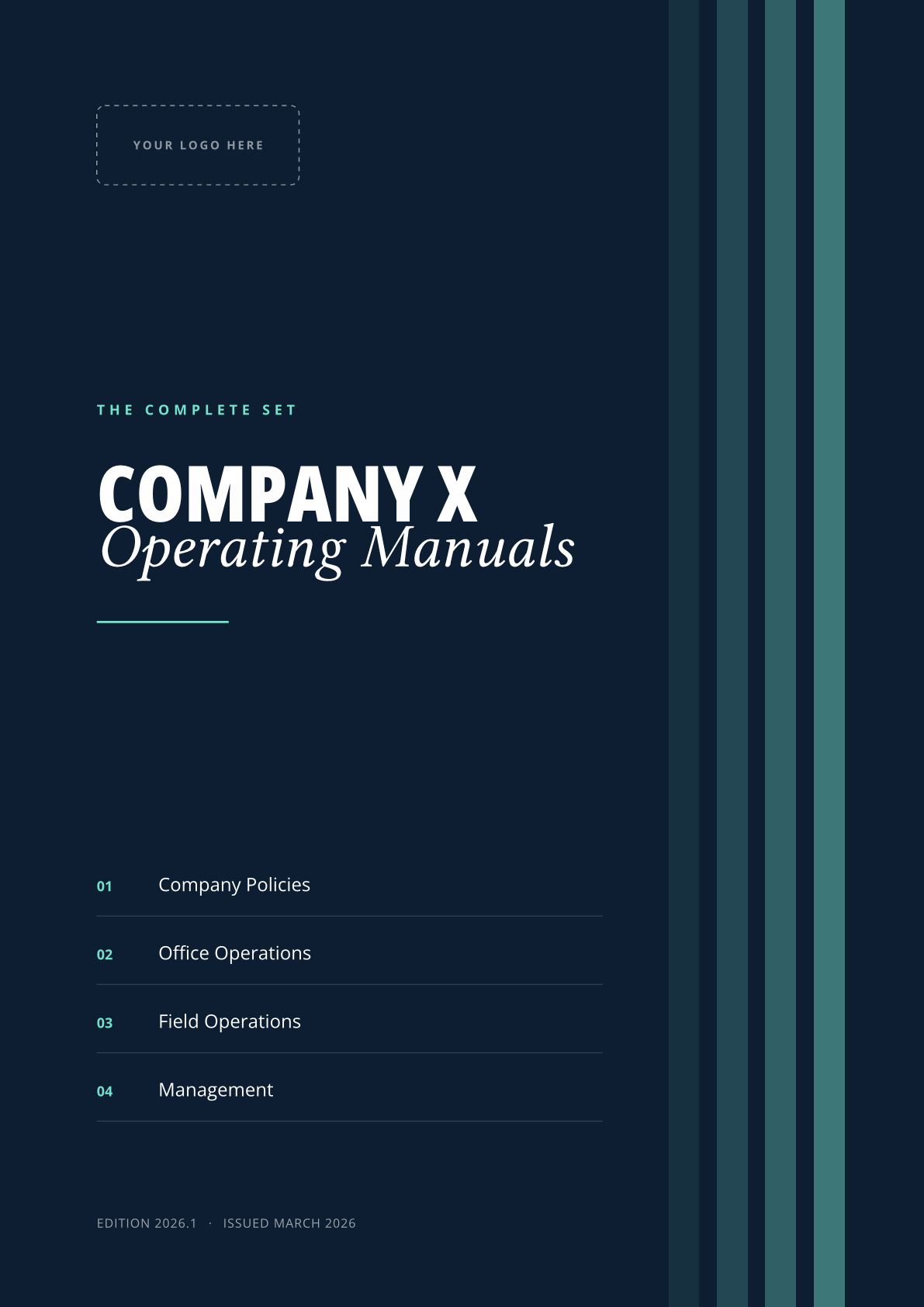
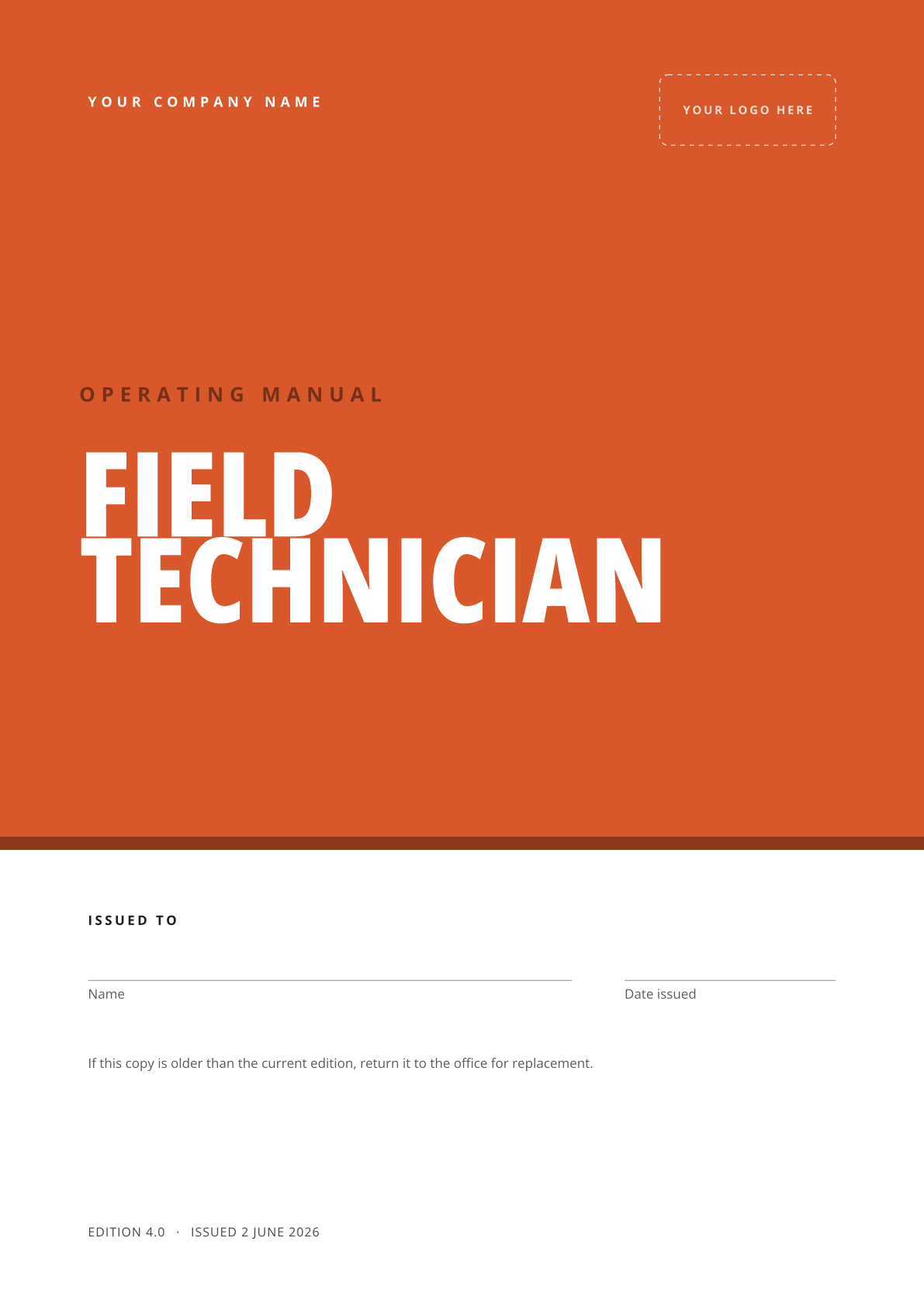
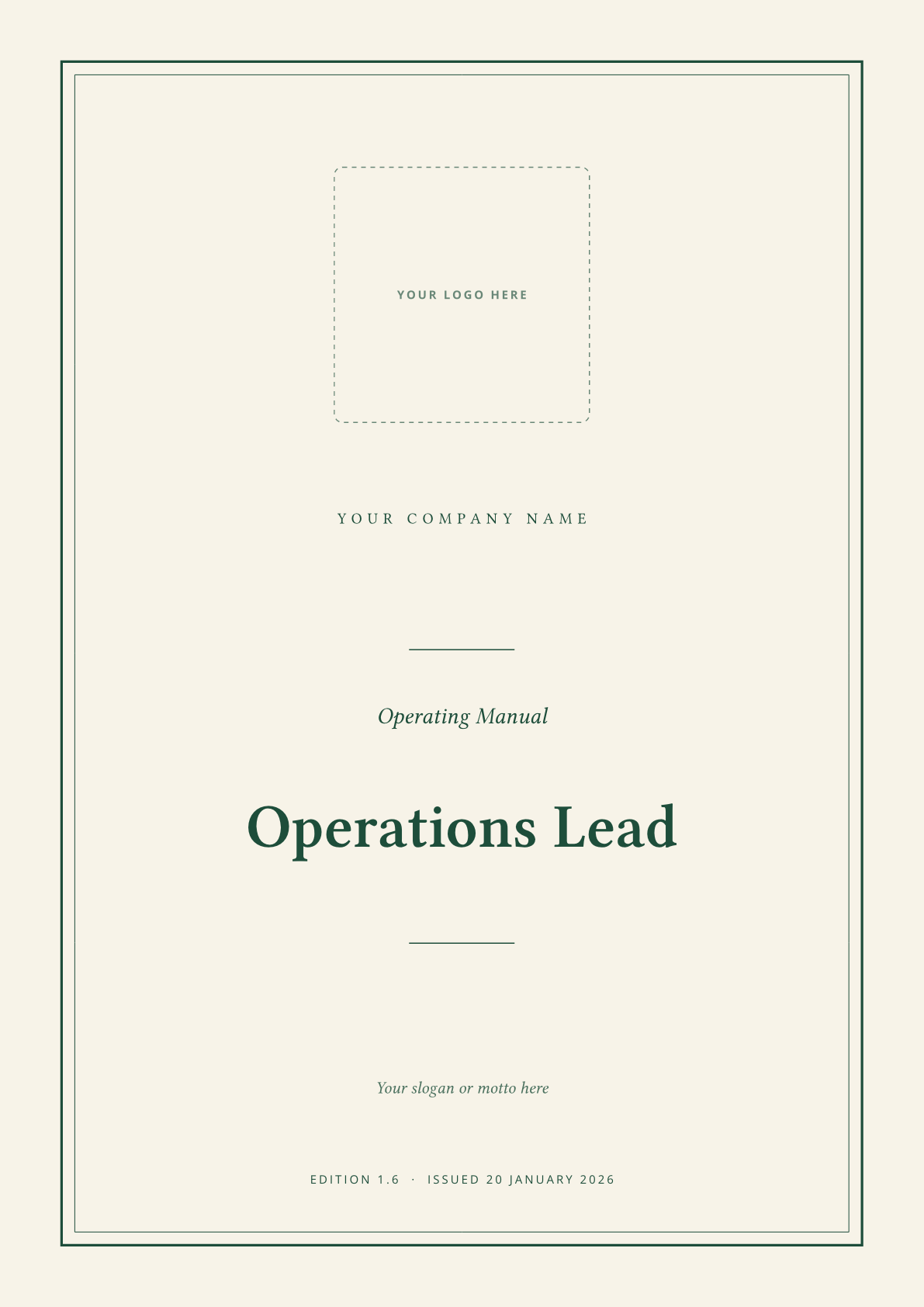
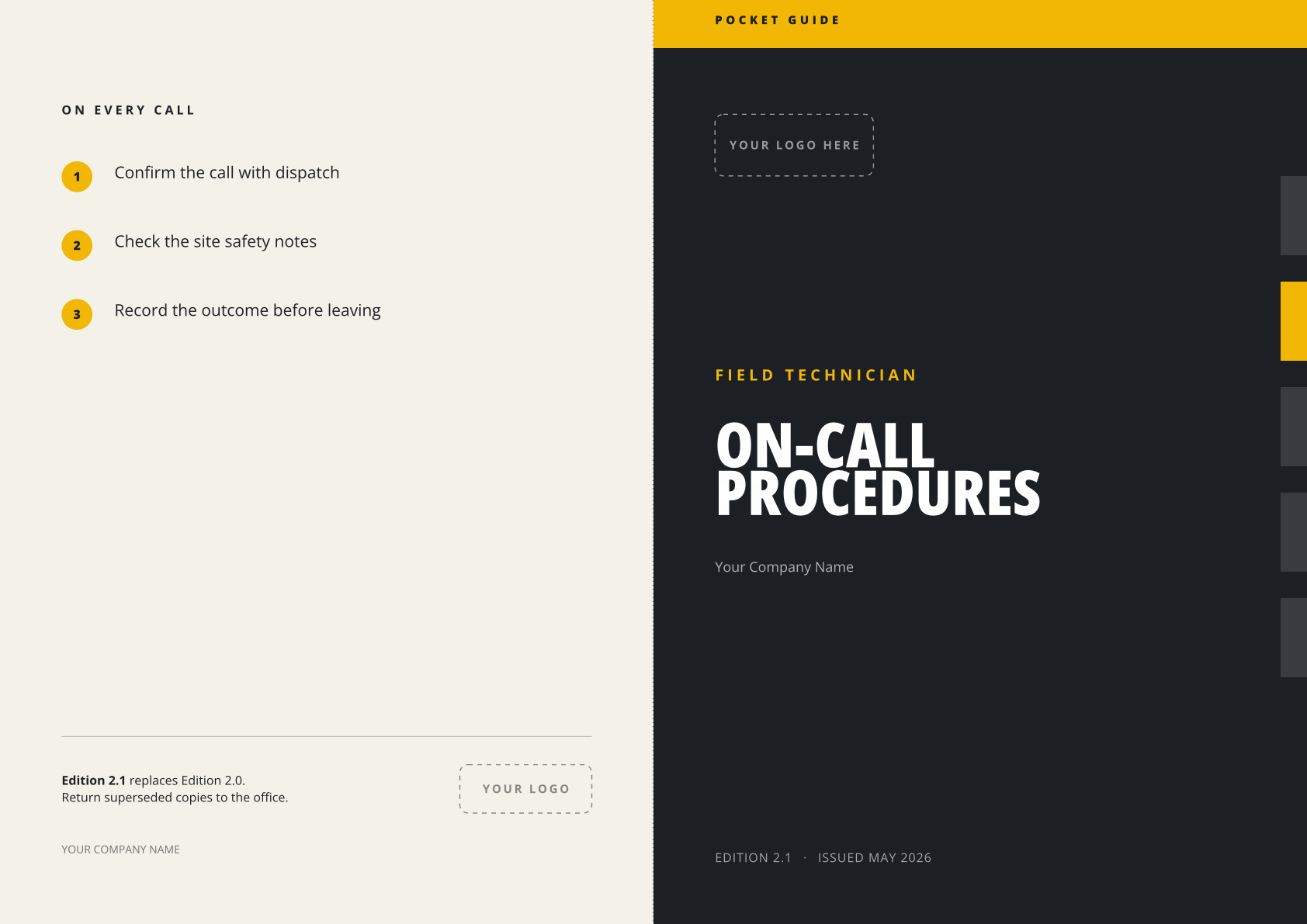
Sample styles with placeholder names and logos. You choose one, and every rolebook uses it.
Bring the policies and procedures you already have. We organize them into a rolebook for each role and maintain approved changes over time. Your company owns the decisions; we manage the documents.
Start with the policies, procedures, and checklists you already use.
Consolidate duplicates, raise contradictions for your decision, and give each role only what it needs.
Your company resolves gaps and approves the wording before anything is issued.
Record approved changes and prepare updated editions.
Owner-led HVAC, plumbing, electrical, and other home-service contractors with separate office, field, and management roles—typically 15 to 75 people. You have procedures written down somewhere, and you want them in one dependable place for each job.
The operating manual for one role at your company: only what that role needs, drawn from your own policies and procedures, and reissued as a new edition whenever something changes. You might know it as a role handbook, an SOP manual, or a playbook.
Yes. A broad job can be split into distinct levels—such as Helper Technician, Junior Technician, Technician, Senior Technician, and Lead Technician—with a rolebook that states what each level does. You decide the titles, advancement requirements, review schedule, pay, and perks. Because each level has different responsibilities and its own rolebook, each is priced as a role.
For the Blueprint and the Core system, yes: we start with the policies and procedures you have and keep them organized and current. If the important work has never been written down, interviewing staff and drafting new procedures is a separate, higher-touch project.
No. Rolebooks is a managed documentation service: organizing your existing material into a rolebook for each role and maintaining approved updates. New process discovery and writing can be scoped separately.
A Workflow Blueprint is a fixed C$3,500, credited in full if you continue within 60 days. The Core system for up to four roles is C$15,000, and Continuity keeps those rolebooks current for C$1,000 a month—no per-employee, per-document, or per-change fees. Prices in Canadian dollars, plus applicable GST/HST. See full pricing.
You do. A designated person at your company approves business, employment, and safety instructions before they are issued.
Yes—as a shared, approved reference for what the company expects. Managers can use the current edition to explain a practice; employees can cite the instructions they followed. A rolebook alone does not prove someone received or followed it; sharing editions, training, and supervising the work still matter.
As numbered PDF and print-ready editions, ready within five business days of your approval. If you already use a training or document tool, we can publish into it at no extra charge. Printing, replacing old copies, and confirming staff have the new edition follow a process you agree with us.